One thing I’ve realised over the years is that I can’t expect people to see what I see.
Not because they lack imagination.
Simply because they haven’t spent weeks, months, or sometimes years living with the same idea in their minds.
As artists, designers, architects, inventors and creators, we often carry finished projects in our imagination long before they exist in reality.
To us, they’re already there.
To everyone else, they’re still invisible.
That creates a gap.
An imagination gap.
And I don’t believe we can blame people for it.
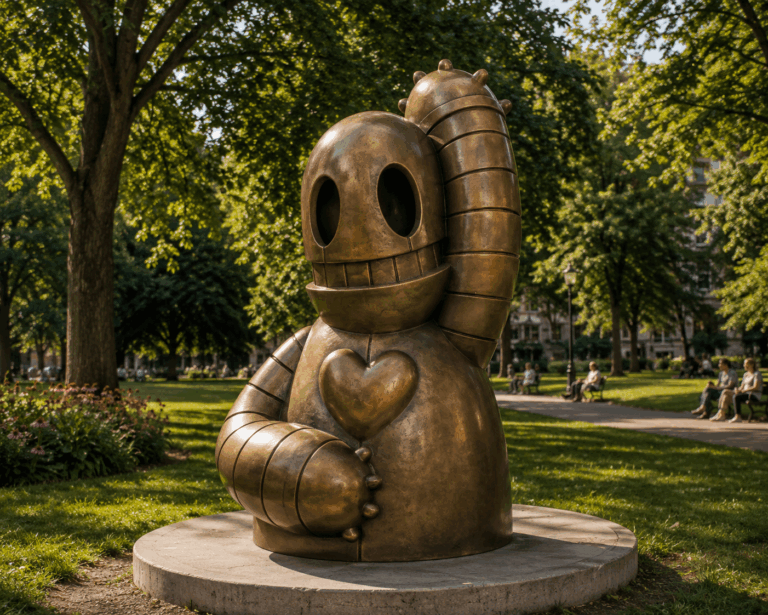
If I tell someone, “Imagine a six-metre bronze Oibot sculpture standing in a city park,” everyone will imagine something different.
Some will picture a robot.
Some will imagine a toy.
Some won’t be able to picture anything at all.
But the moment I show them a visual, something changes.
The conversation shifts.
People stop trying to imagine what I mean.
They begin reacting to the idea itself.
That’s incredibly valuable.
One thing I’ve learnt throughout my career is that visualisation doesn’t simply help present an idea.
It helps develop it.
Many of my projects only became what they are because I was able to visualise them first.
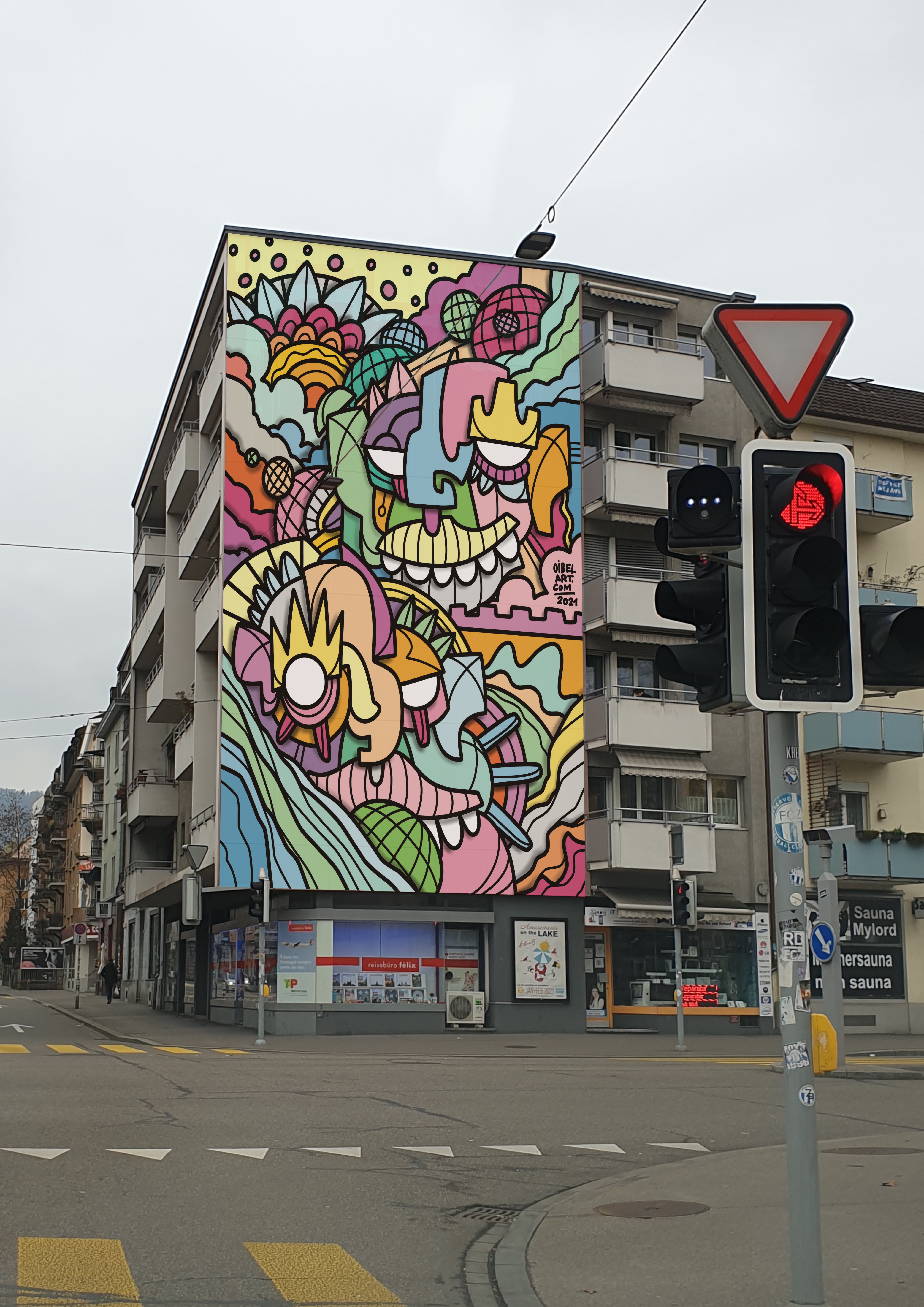
(Flow mural mock-up)
My Flow Murals are a good example.
Long before they existed on real walls, I placed them digitally onto photographs of buildings and public spaces.
Suddenly, what had only existed inside my head became something other people could see as well.
The project became easier to discuss.
Easier to improve.
Easier to imagine.
And ultimately, easier to realise.
Ideas don’t move projects forward. Visualised ideas do.
That’s why artificial intelligence has become such an important tool within my own creative process.
Not because it creates my ideas.
The ideas were already there.
Many of them have lived in my sketchbooks and imagination for years.
Oibot playgrounds.
Large public sculptures.
Interactive public art.
Spatial interventions.
Projects that, until recently, mostly existed inside my own head.
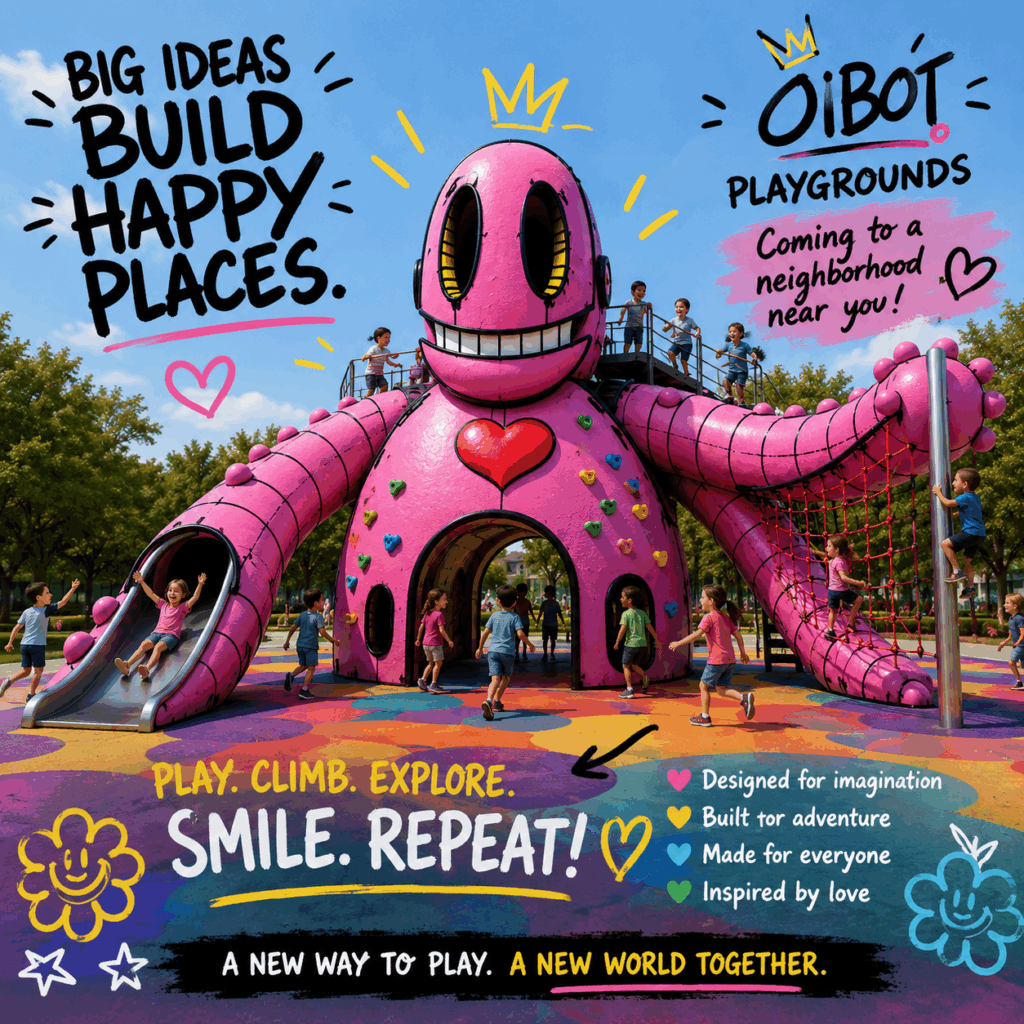
(Oibot playground concept.)
AI doesn’t replace those ideas.
It helps me bring them into a form where I can finally have a conversation about them.
Sometimes the images are completely wrong.
Sometimes they’re surprisingly close.
Often they reveal possibilities I hadn’t considered before.
That’s what makes the process so exciting.
Visualisation becomes another stage of thinking.
It becomes a conversation.
A sparring partner.
A way of asking:
“What if?”
As a solopreneur, that has completely changed the way I work.
I don’t have a studio full of architects, industrial designers, concept artists and 3D visualisers.
For years, many ideas simply remained ideas because creating convincing visualisations required time, specialised knowledge and budgets I simply didn’t have.
Today, I can explore those same ideas within hours.
I can compare different directions.
Reject weak ones.
Combine unexpected ones.
Refine promising ones.
Move faster.
Not because I’m skipping the thinking.
Because I’m thinking visually.
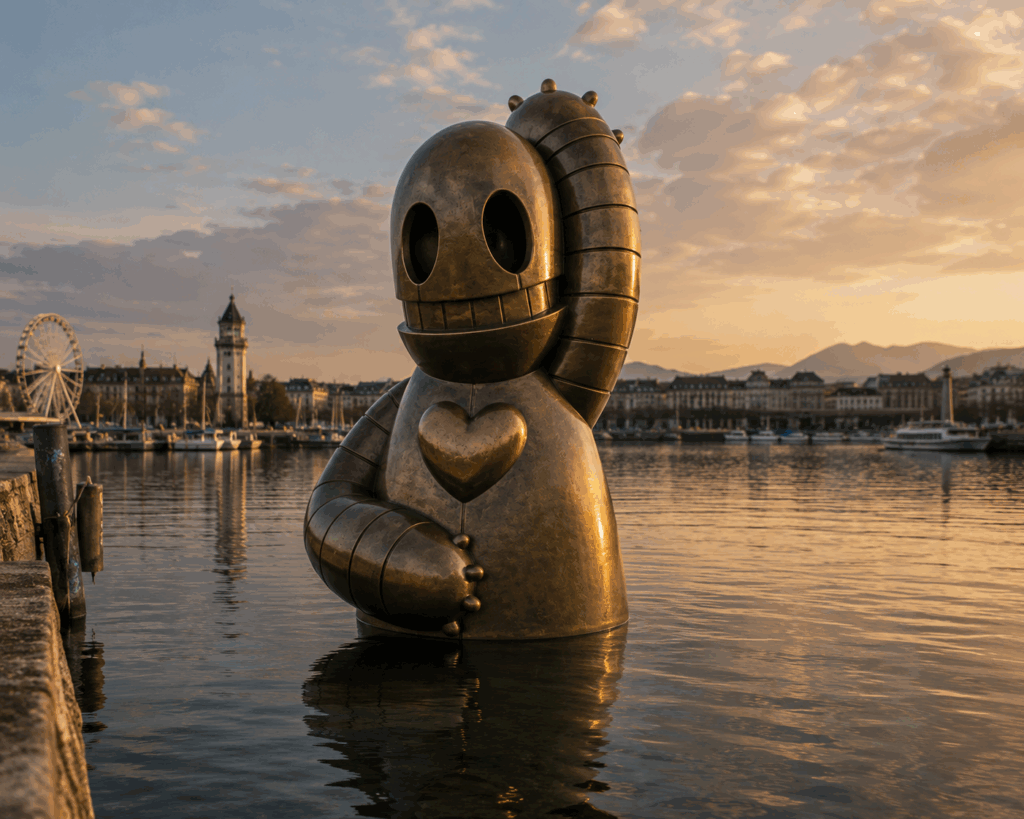
(Oibot bronze sculpture in the harbour/lake.)
The technology is here.
It’s not going away.
If anything, it will become an even bigger part of how we work and communicate.
To me, the interesting question isn’t whether we should resist it.
The interesting question is how we choose to use it.
Like every creative tool before it, AI reflects the intention of the person using it.
If you’re curious, it gives you more room to explore.
If you’re thoughtful, it becomes a partner in developing ideas.
If you’re lazy, it simply helps you produce lazy work faster.
The tool isn’t creative.
People are.
That’s why I don’t believe AI will replace artists.
Or creatives.
Or genuinely good ideas.
It has made image-making accessible to almost everyone.
But making images has never been the difficult part.
The difficult part is noticing something worth saying.
It’s recognising an opportunity others haven’t seen.
It’s connecting ideas from completely different worlds.
It’s carrying an idea with you for years until the right moment arrives.
It’s having the courage to pursue something long before anyone else understands it.
Technology can accelerate visualisation.
It cannot replace curiosity.
It cannot replace lived experience.
It cannot replace intuition.
It cannot replace relationships.
It cannot replace human experience.
And it cannot replace the uniquely human ability to find meaning in the world around us.
For me, AI hasn’t replaced creativity.
It’s expanded it.
It has become a thinking partner.
A visualisation partner.
A way to close the imagination gap between what exists in my mind and what other people are able to see.
Because once people can see an idea, they can challenge it.
Improve it.
Build on it.
Or help make it real.
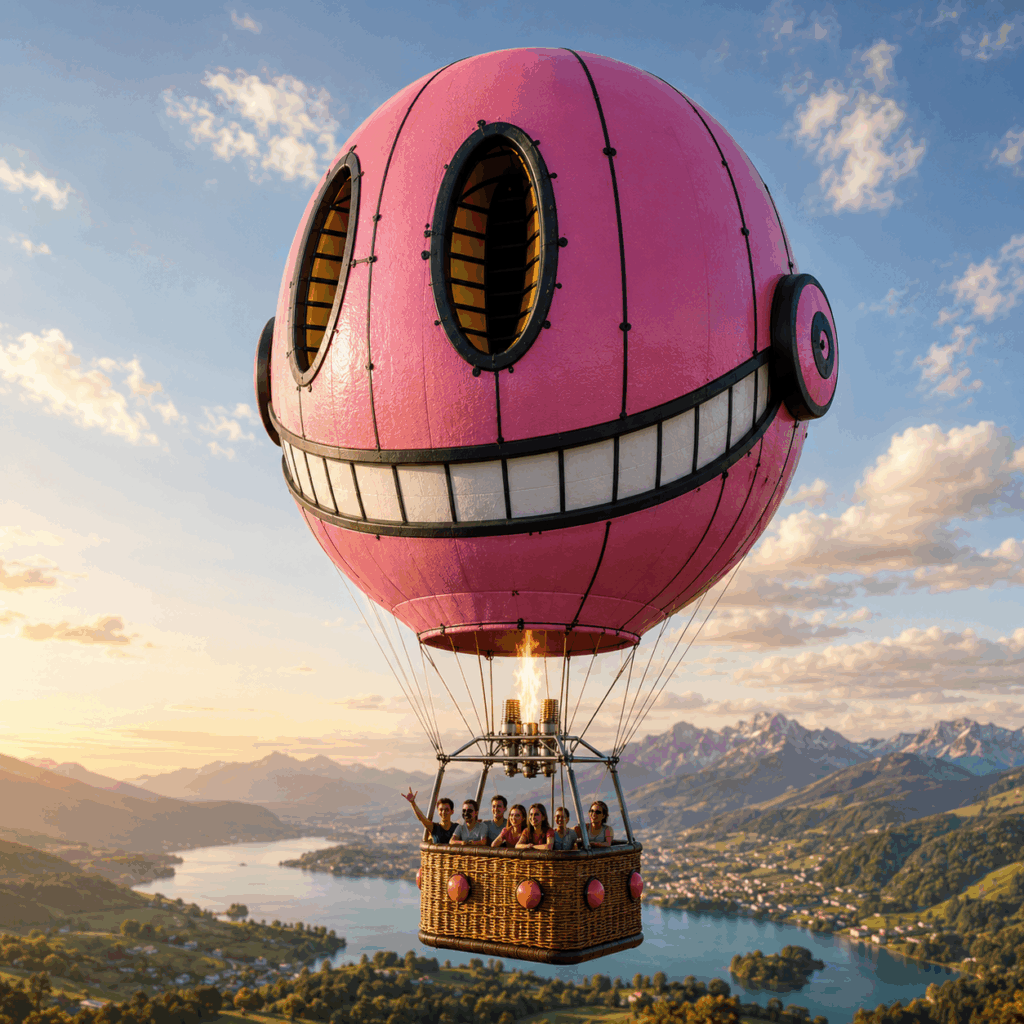
(Oibot – Hot air balloon concept)
There’s a reason we’ve been saying for generations that a picture says more than a thousand words.
It’s because the moment an idea becomes visible, it no longer belongs only to the person who imagined it.
It becomes something others can question, improve, challenge, believe in, and ultimately help bring to life.
That’s the real power of visualisation.
Not replacing imagination.
Sharing it.
Every project begins in someone’s imagination. The future belongs to those who find a way to share it.