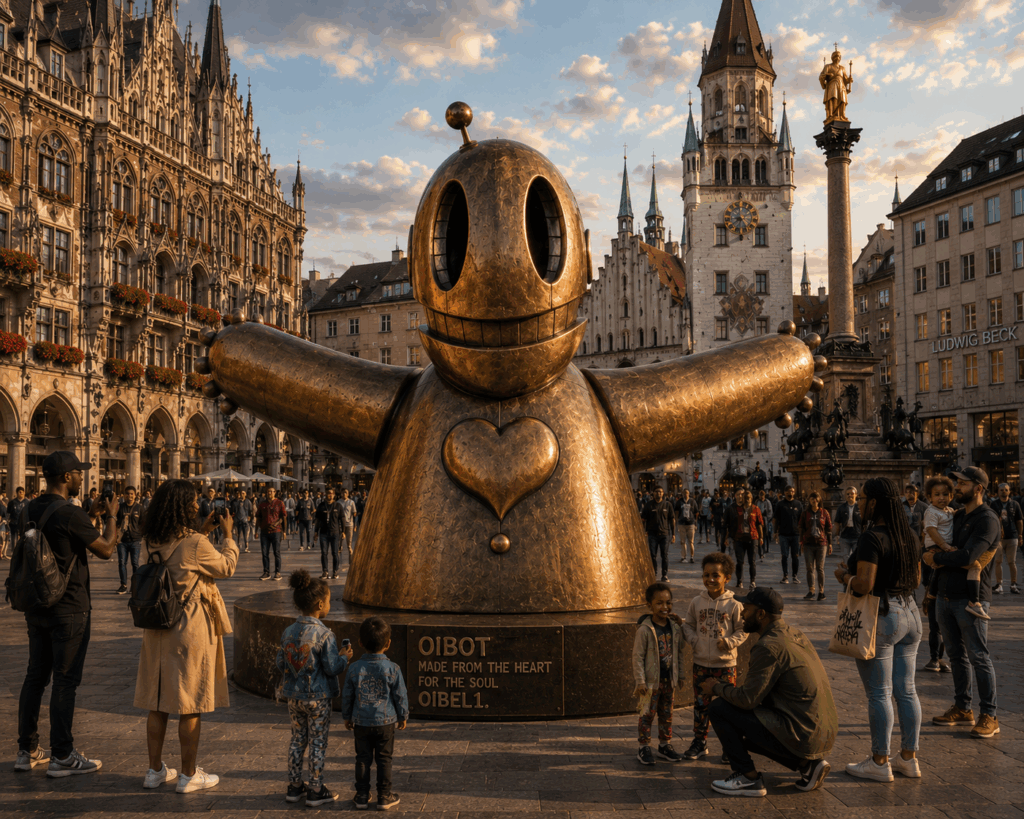
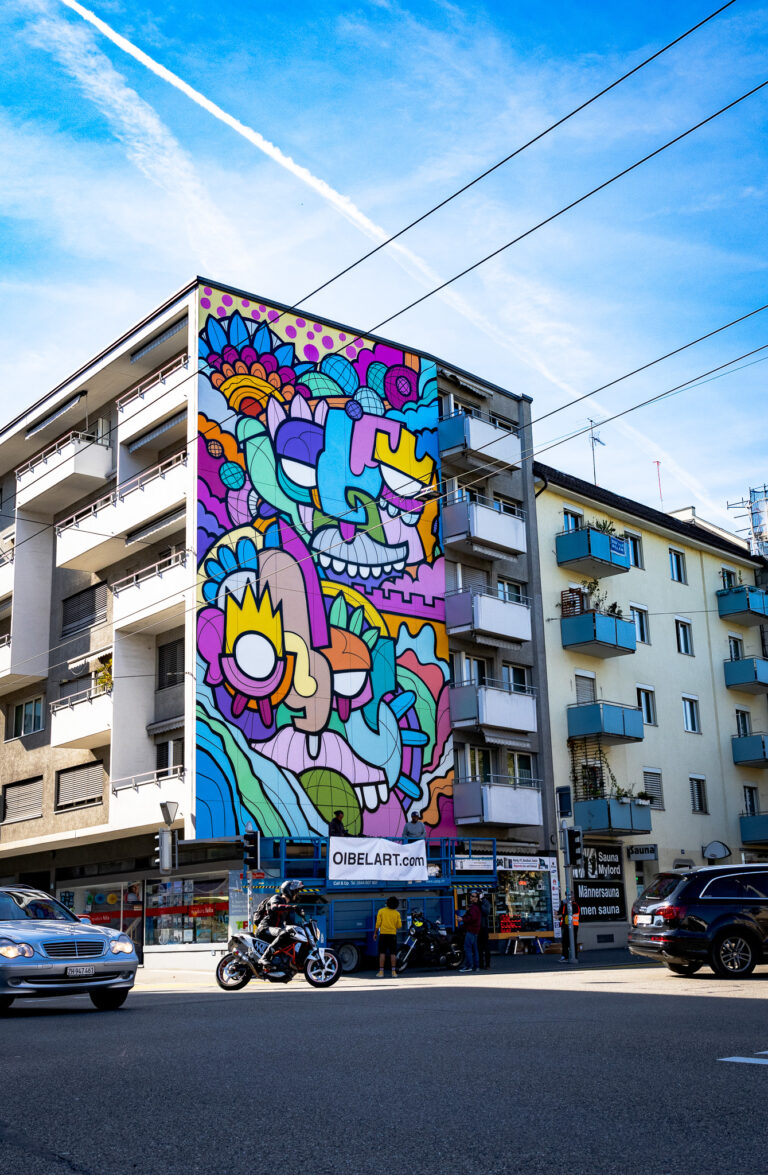
For a long time, I thought I was creating murals.
Looking back, I think I was creating experiences.
Over the years, I’ve painted walls, shopping centres, office spaces, floors, furniture, vehicles and objects. At first, my attention was naturally on the artwork itself.
But somewhere along the way, I stopped looking only at what I had painted.
I started watching what people did afterwards.
That’s when something became obvious.
The artwork wasn’t the end of the story.
It was the beginning of a new one.
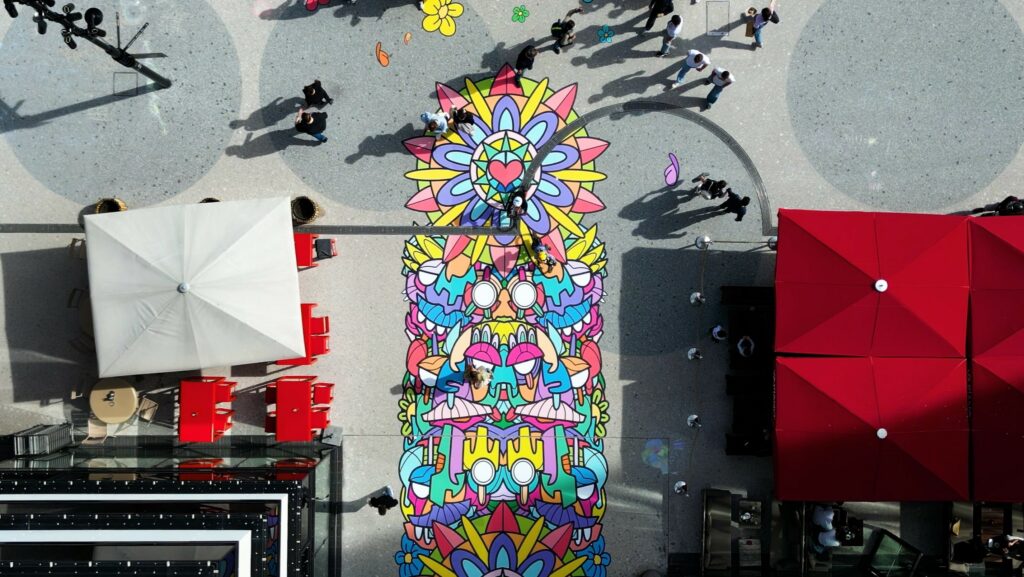
Children started jumping from colour to colour across a floor installation instead of simply walking over it.
People who had passed the same grey wall every day suddenly stopped, smiled, took photographs or met in front of it.
Places that had previously gone unnoticed became landmarks.
Spaces that felt anonymous suddenly became places people recognised, enjoyed and felt proud to be part of.
I don’t believe murals change walls.
I believe they change the way people experience the walls – and therefore the places around them.
That observation stayed with me.
The more projects I completed, the more I realised that I wasn’t simply creating artworks.
I was changing relationships between people and the environments they inhabit.
What interests me isn’t the wall itself.
It never was.
What interests me is what happens because the wall has changed.
Do people slow down?
Do they smile?
Do they start talking?
Do children interact with it?
Does a forgotten place become memorable instead of anonymous?
To me, that’s where the artwork truly begins.
The artwork isn’t complete when the paint dries. It’s complete when people begin living with it.
That is what I now call Spatial Vitality.
The idea is simple.
The spaces we spend our time in influence us far more than we often realise.
Whether it’s an office, a shopping centre, a school, a hospital, a playground, a hotel or a public square, every environment quietly shapes how we think, feel, interact and remember.
Most spaces are designed to function.
Far fewer are designed to make us feel something.
I believe that’s where art has a much bigger role to play.
Not as decoration.
Not as an afterthought.
Not as something that simply fills an empty wall.
Art rarely changes architecture. It changes the human experience of architecture.
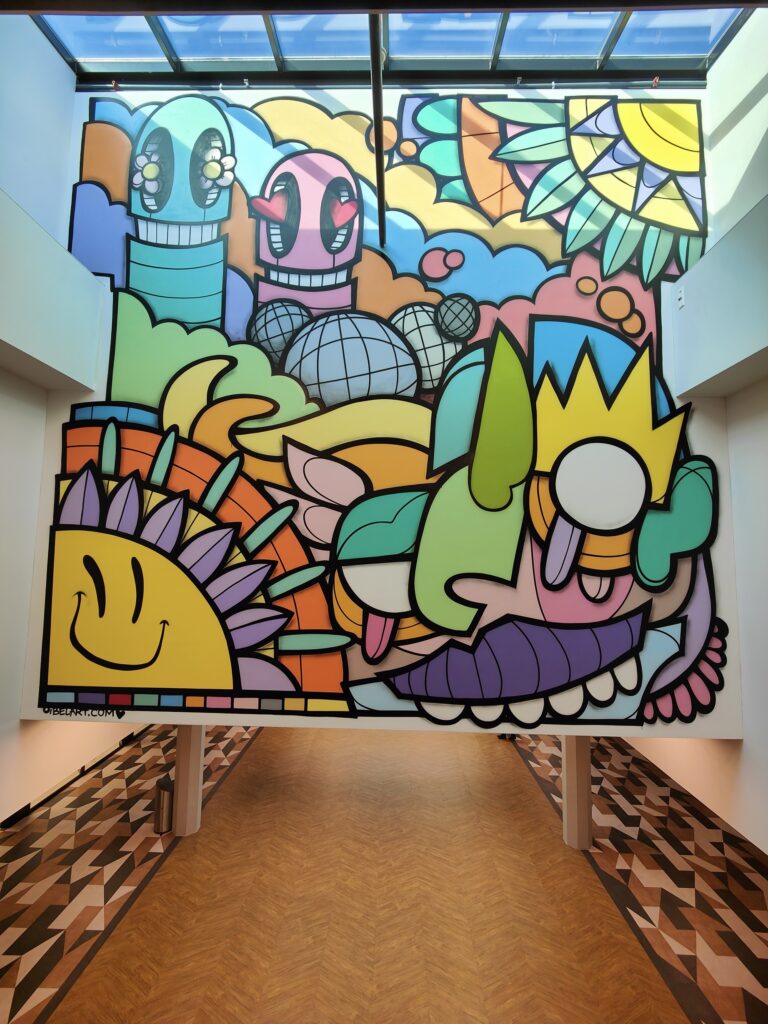
That difference matters.
Over the past few years, the way we work has changed dramatically.
Remote work, hybrid teams and video calls have become part of everyday life. Many people now spend more time looking at colleagues through a screen than sitting beside them.
That changes the role of the workplace.
If people no longer come to the office simply because they have to, then the office needs to offer something that cannot be experienced through a laptop.
Human connection.
Shared experiences.
Inspiration.
A sense of belonging.
I believe art has an important role to play in creating those environments.
Not because a mural magically makes people more productive.
But because it changes how people experience the place where they spend a significant part of their lives.
Most people spend more waking hours at work than they do with the people they love.
That simple fact raises an interesting question.
Why wouldn’t we invest in making those environments more welcoming, more inspiring and more human?
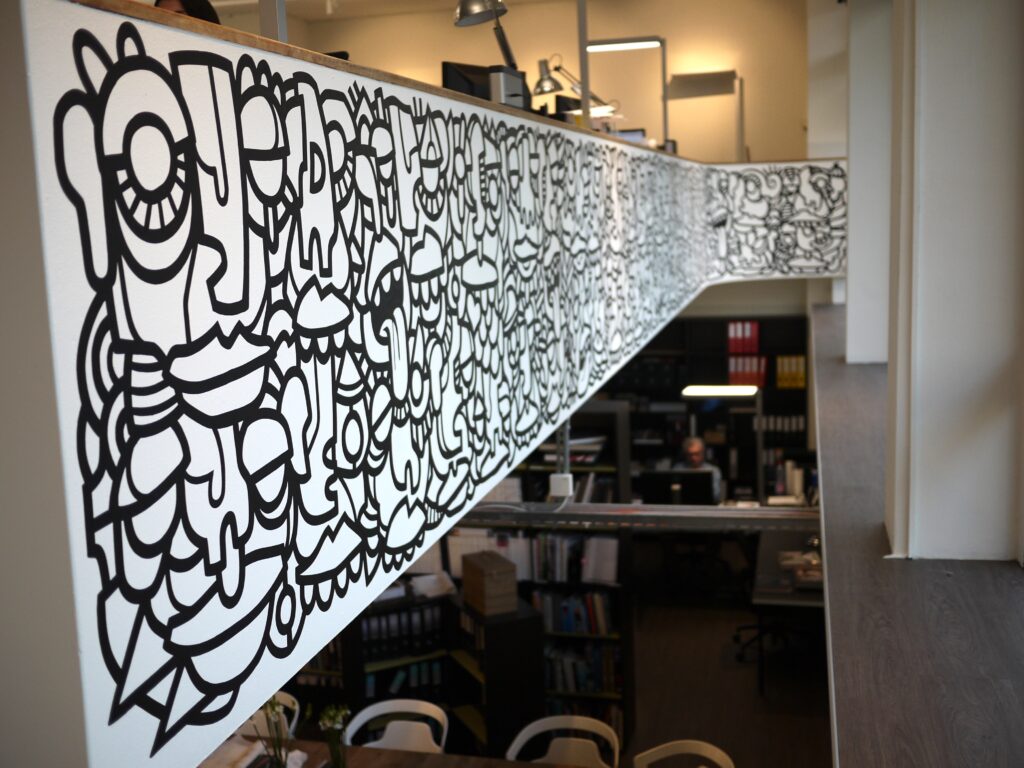
I don’t know if a mural can change someone’s life.
But I do believe it can change someone’s morning.
It can make a commuter smile on the way to work.
It can encourage a child to play instead of simply passing through.
It can transform a forgotten corner into a place where people stop, meet and create memories.
And if enough mornings become a little brighter, perhaps lives change too.
Over time, I also realised that this way of thinking doesn’t stop at buildings.
The same principle applies to the objects we surround ourselves with every day.
A chair.
A table.
A vase.
A watch.
A speaker.
A vehicle.
A pair of shoes.
An item of clothing.
When art becomes part of these objects, they often become more than functional products.
They become experiences.
They invite interaction.
They spark curiosity.
They tell stories.
They create emotional connections that reach far beyond their practical purpose.
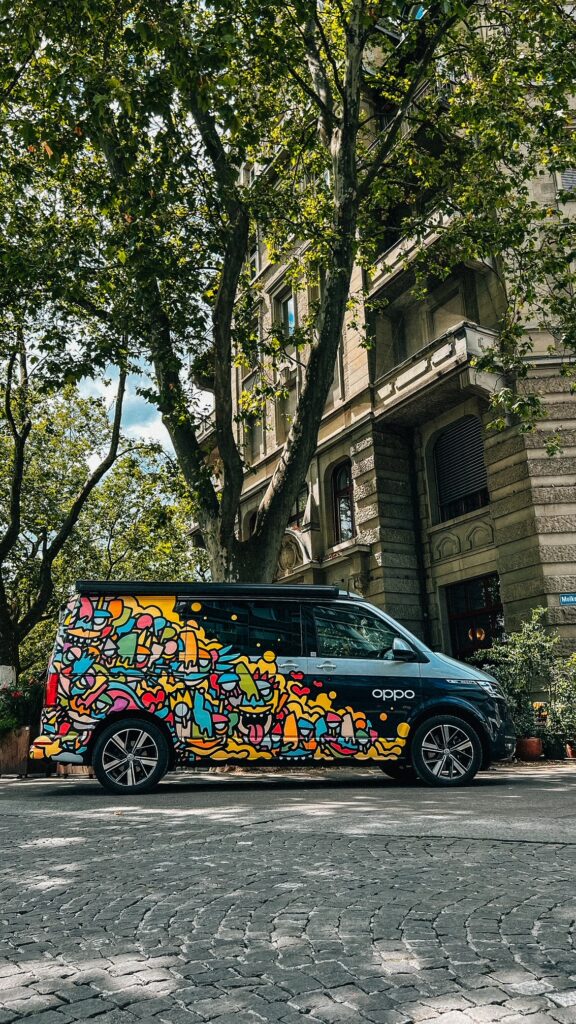
Whether we’re designing a playground, creating a public sculpture, painting a shopping centre, customising a vehicle or drawing on a handcrafted Moon Jar, I believe we’re exploring the same question.
How does this change the way someone experiences the world around them?
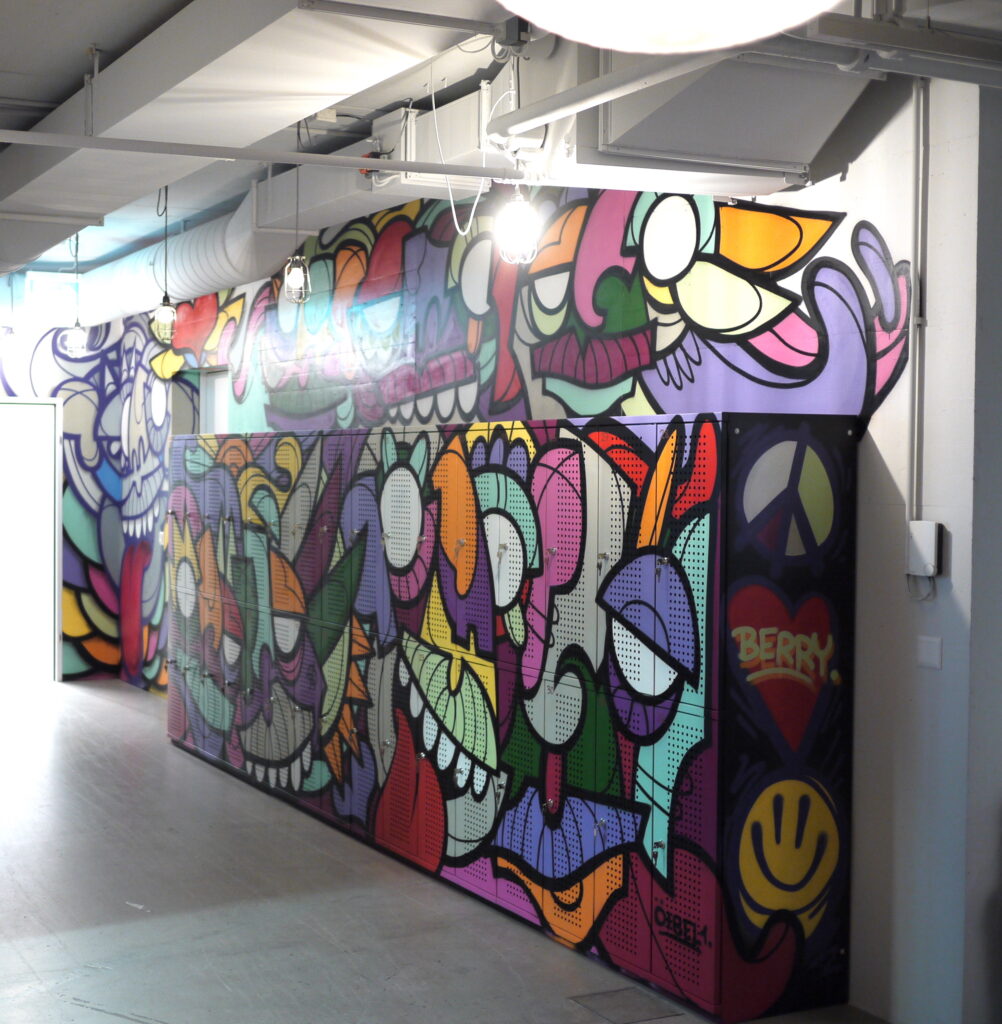
To me, all of these projects belong to the same conversation.
They’re all attempts to increase the vitality of the spaces and objects we interact with every day.
Because I don’t believe we only shape the environments around us.
I believe those environments quietly shape us in return.
Our surroundings influence our mood.
Our behaviour.
Our conversations.
Our willingness to slow down.
To notice.
To play.
To connect.
Not only with the space itself, but with one another – and perhaps even with ourselves.
That’s why I believe art belongs far beyond galleries.
It belongs wherever people live, work, learn, heal, travel, gather and play.
Looking back, I realise I didn’t invent this idea.
I simply recognised a pattern that had been present in my work all along.
Maybe I’ve been practising Spatial Vitality for years.
I just didn’t have a name for it yet.
Because in the end, it’s never only about what we create.
It’s about how what we create shapes the people who experience it.